Uncontacted Indians face extinction
June 30, 2000
This page was created in 2000 and may contain language which is now outdated.
'They killed my mother, my brothers and my sisters, and my wife.' Karapiru Awá, survivor of a massacre
Unless the Brazilian government, the World Bank and the mining company CVRD take urgent action, uncontacted Awá Indians in Brazil could soon be wiped out.
In 1982 the Brazilian government and the mining company CVRD received over US$900 million from the World Bank and European Union to develop the iron ore deposits in the Carajás mountains. One condition of the World Bank loan was that all Indian territories within the sphere of the Carajás project should be officially recognised by the Brazilian government, having their boundaries demarcated by FUNAI, the government's Indian agency. Two decades on, and despite the availability of this money, the Awá in Maranhão state are still waiting for their land rights to be recognised. The demarcation has been blocked largely by politicians and businessmen, some of whom have large landholdings on Awá land.
The delay in demarcation has left the Indians' land unprotected, and led to the massive invasion and devastation of the land by loggers, ranchers, and settlers. Even worse, Awá groups have been attacked and killed as the scramble to steal their land and resources intensifies. There are now 276 properties settled in the Awá area, the centre of which has reportedly been heavily invaded. Much of this has happened since 1990, years after the project to protect Indian lands was established by FUNAI and CVRD. Survival fears that the government may try to reduce the size of the Awá area – originally defined as 247,000 hectares. It is crucial that all their land is recognised: the Awá's territory is very important to them (as it is to all tribal peoples) and is necessary to sustain their nomadic way of life.
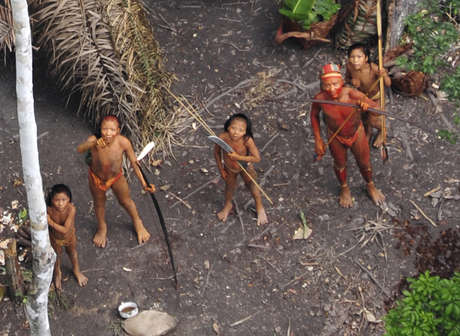
Moreover, the Awá area is critical as it links two other Indigenous areas, the Carú to the south, and the Alto Turiaçu to the north, where Awá also live. There are clear indications that the Awá area is inhabited by uncontacted groups which, according to local FUNAI employees, number at least 50 people. These groups are extremely vulnerable. In December 1998, six of a group of 10 uncontacted Awá died, probably from disease transmitted by outsiders. The survivors now live in Juriti village with other Awá families. Contacted Awá and non-Indian hunters have reported regular sightings of small, uncontacted Awá groups over the last few years.
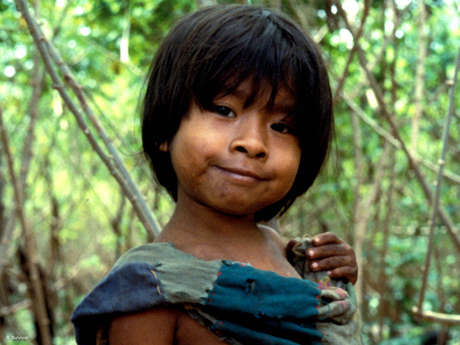
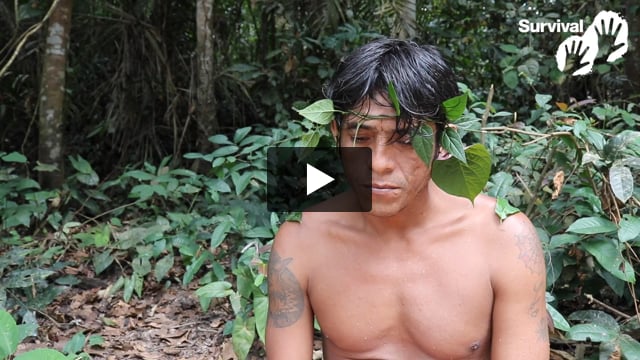
The Awá people are one of the last nomadic hunter gatherer peoples in Brazil. In 1950 their population was estimated at 800. Today they number less than 400, of whom about 150 are uncontacted. They are widely spread, inhabiting at least four Indian territories in Maranhão. It is believed that 200-300 years ago they were agriculturalists who were forced into nomadism to survive waves of Portuguese and Brazilian settlers invading their land. Now they live in small, mobile groups moving from shelter to shelter in the Amazon forest. They hunt game such as tapir, peccary and monkeys and gather fruits and nuts, especially from the babassu palm. Most of the Awá who have been contacted and live in villages are the survivors of brutal massacres.
The Brazilian government, CVRD and the World Bank are guilty of violating both the Brazilian constitution and the World Bank's operational directive on Indigenous peoples by ignoring the Awá's land rights. Failure to act has led to the deaths of unknown numbers of uncontacted Awá and the invasion and destruction of a large part of their land. Survival is calling for the immediate recognition and protection of their land which is the only hope for the survival of Brazil's last nomadic people.
You can help the Awá Indians of Brazil. Click here to write a letter of complaint to the Brazilian government.