Loggers poised to overrun uncontacted Indians
September 1, 2001
This page was created in 2001 and may contain language which is now outdated.
"They all died. My uncle and cousins died as they were walking along…."
Shocorua, Yora woman
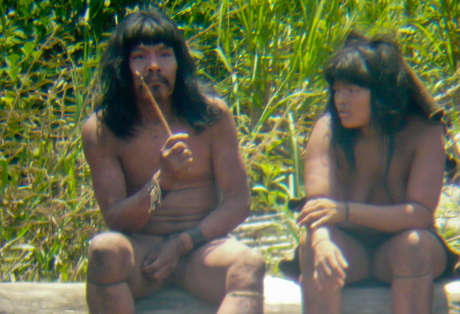
The Peruvian government is poised to allow logging companies to invade the territory of uncontacted Indians in the Amazon. Other, contacted, Indians in the region have appealed to Survival for support over this situation: they know that if the loggers go in floods of colonists are likely to follow, bringing with them contagious diseases fatal to the isolated tribes.
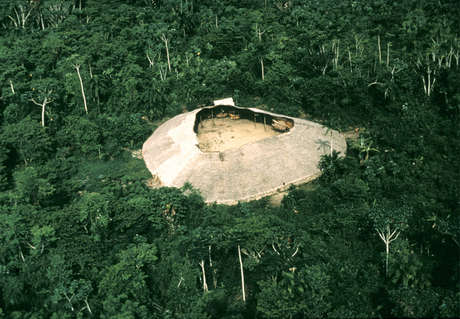
The isolated Indians, members of the Yora, Mashco-Piro and Amahuaca tribes, live near the Peru-Brazil border. This remote area of rainforest is the source of several Amazonian tributaries – the Purús, Las Piedras, Yacu, Chandless, Los Amigos and Tahuamanu. A century ago, Indians fled into these headwaters to escape the massacres, slavery and diseases of the rubber boom which wiped out 90% of the Indian population.
These isolated tribes are highly nomadic, and small family groups move around frequently. During the dry season families tend to live by the rivers, as fishing is relatively easy and turtle eggs can be collected from the sandy beaches. In the wet season they retreat further into the forest to hunt and collect fruits, berries and nuts.
Part of their refuge was invaded in the 1980s by Shell, who were looking for oil. The oil exploration paths subsequently acted as an easy entrance for colonists, who brought with them colds, flu and other diseases which the isolated Indians had never encountered. In the ensuing epidemic, between 50 and 100 Yora died in the forest.
Shocorua, a Yora woman, related, 'They all died. My uncle and cousins died as they were walking along… their eyes started to hurt, they started to cough, they got sick and died right there in the forest. Some were small children. They put all the bodies in a big hole and everyone was wailing and crying.'
In 1996, the oil company Mobil also explored in this region. After a vigorous worldwide campaign of vigils, demonstrations and thousands of letters from Survival supporters, Mobil withdrew two years later.
In July 2000, the Peruvian government responded to the unprecedented international protests by creating the 'Upper Purús Reserved Zone' (UPRZ). This gave some of the area temporary protection from loggers and colonists, but it fell far short of the land ownership rights demanded by international law – and it left out a crucial area to the south-east where many of the isolated Indians live.
Now logging companies are operating at the fringes of the protected area, and they are vigorously lobbying the government's forestry department, INRENA, to grant them formal concessions. If the loggers go in, many of the isolated Indians will flee from the noise and destruction – and many will die as diseases spread into the area.
A tragic incident on 11th February provided an indication as to what will happen if the loggers are allowed in. On that date, a large group of isolated Yora Indians suddenly appeared near a community of Sharanahua and Amahuaca Indians, far outside their usual territory. There was a violent clash, and many Yora were shot. Their families carried the bodies back into the forest, so it is not known how many died or were wounded.Almost certainly the activities of loggers already operating in this region caused the frightened Yora to flee into the territory of neighbouring tribes, whom they would normally avoid.
Loggers have also advanced far up the Tahuamanu and other rivers, and penetrated far into the territory of the uncontacted Indians. They are said to find tracks and abandoned huts regularly.
The Peruvian government must not allow loggers to enter the area reserved for these vulnerable tribes. Previous experience shows all too clearly that if the little protection now accorded to these isolated Indians is reduced, the result will be the tragic deaths of many.
See How you can Help the Yora.