
Before the arrival of Europeans in 1500, Brazil was home to at least 1,000 tribes with a total estimated population of 5 – 13 million people.
There are about 305 tribes living in Brazil today, totaling around 1,7 million people, or 0.8% of Brazil’s population.
The government has recognized 690 territories for its indigenous population, covering about 13% of Brazil’s land mass. Nearly all of this reserved land (98.5%) lies in the Amazon.
But although roughly half of all Brazilian Indigenous people live outside the Amazon, they only occupy 1.5% of the total land reserved for Indigenous people in the country.
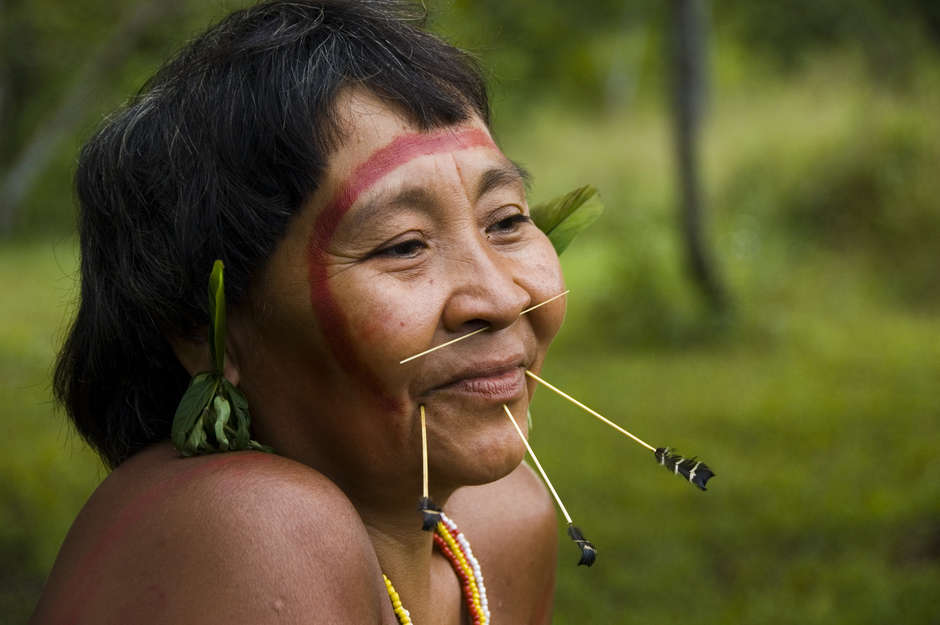
Those peoples who live in the savannahs and Atlantic forests of the south, such as the Guarani and the Kaingang, and the dry interior of the north-east such as the Pataxo Hã Hã Hãe and Tupinambá, were among the first to come into contact with the European colonists when they landed in Brazil in 1500.
Despite hundreds of years of contact with expanding frontier society, they have in most cases fiercely maintained their language and customs in the face of the massive theft of, and continuing encroachment onto, their lands.
The largest Indigenous people today is the Guarani, but they have very little land left. During the past 100 years almost all their land has been stolen from them and turned into vast, dry networks of cattle ranches, soya fields and sugar cane plantations. Many communities are crammed into overcrowded reserves, and others live under tarpaulins by the side of highways.
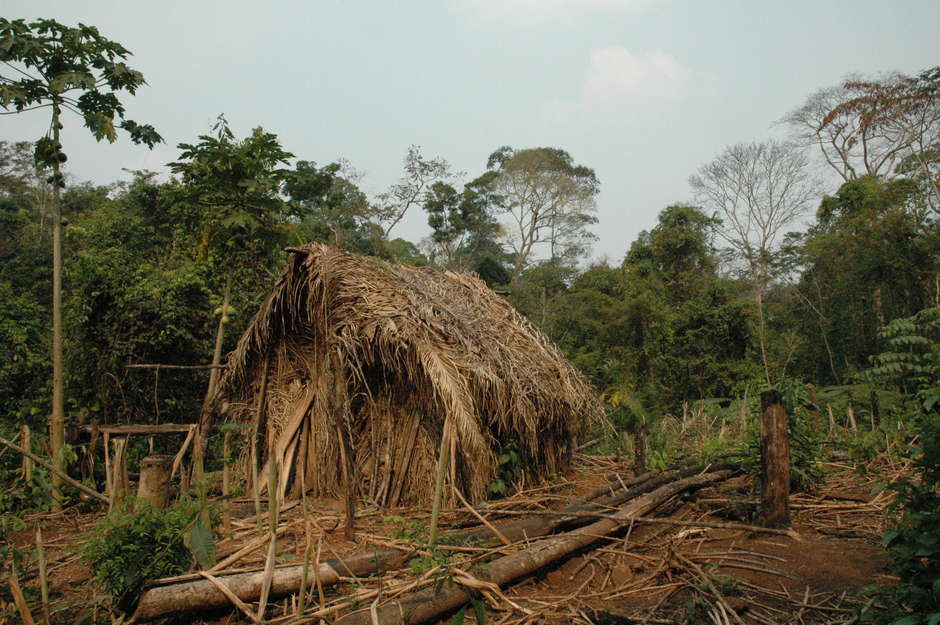
The people with the largest territory are the relatively isolated 30,000 Yanomami, who occupy 9.4 million hectares in the northern Amazon, an area about the same size as the US state of Indiana and slightly larger than Hungary.
The largest Amazonian tribe in Brazil is the Tikuna. The smallest include the Akuntsu who are three women, the last survivors of decades of massacres by cattle ranchers and other outsiders, and the uncontacted Piripkura who are threatened by illegal loggers and whose land has not been demarcated by the government, in violation of Brazilian and international law.
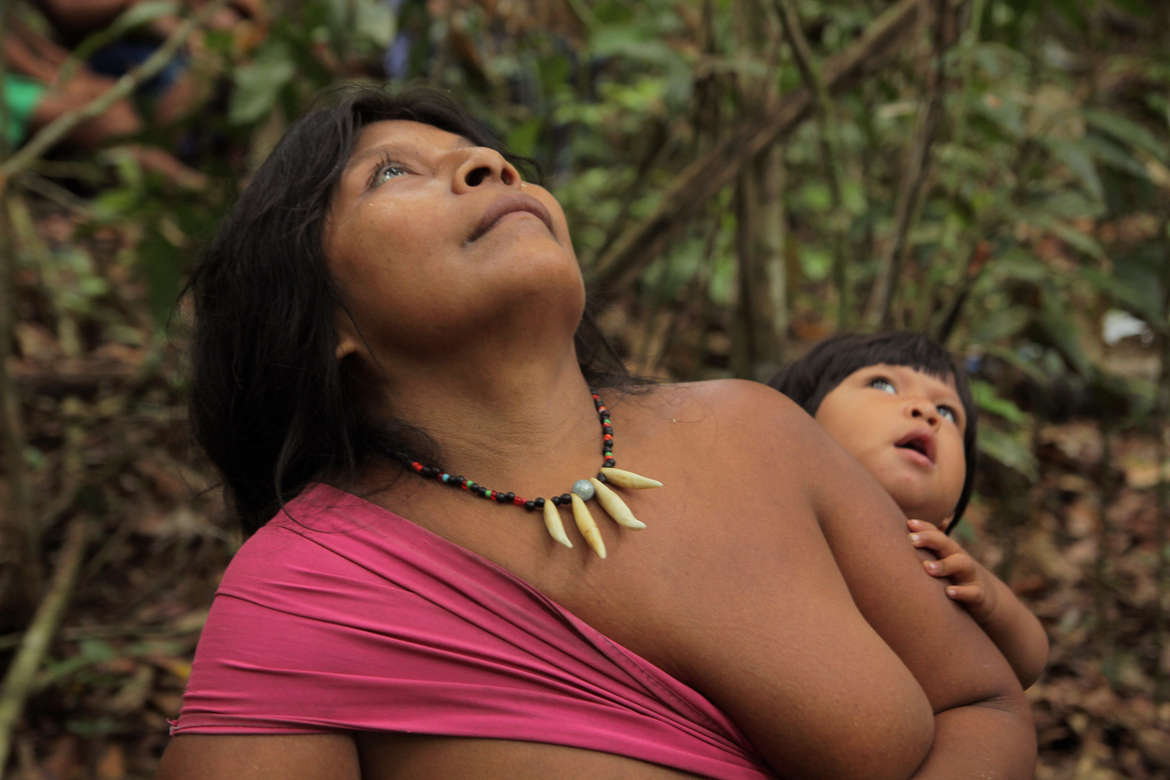
Uncontacted
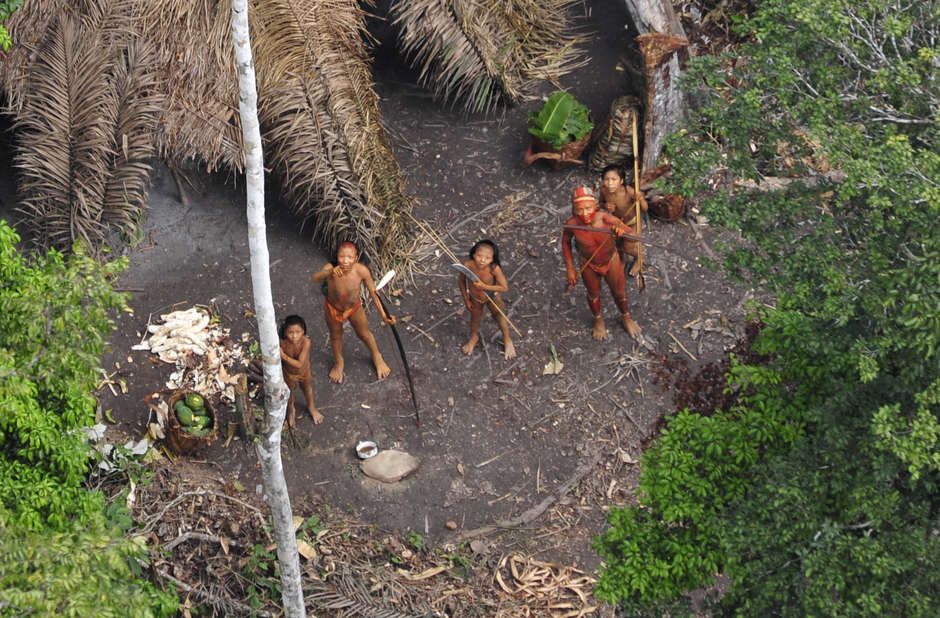
Brazil is home to more uncontacted peoples than anywhere on the planet. It is now thought that over 100 such groups live in the Amazon. Some number several hundred and live in remote border areas in Acre state and in protected territories such as the Vale do Javari, on the border with Peru. Others are scattered fragments, the survivors of tribes virtually wiped out by the impacts of the rubber boom and expanding agriculture in the last century. Many, such as the nomadic Kawahiva, who number a few dozen, are fleeing loggers and ranchers invading their land.
As pressure mounts to exploit their lands, all uncontacted tribes are extremely vulnerable both to violent attack (which is common), and to diseases widespread elsewhere like flu and measles, to which they have no immunity.
Livelihoods
Most tribes live entirely off the forests, savannas and rivers by a mixture of hunting, gathering and fishing. They grow plants for food and medicine and use them to build houses and make everyday objects.
‘We Indians are like plants. How can we live without our soil, without our land?’
(Marta Guarani)
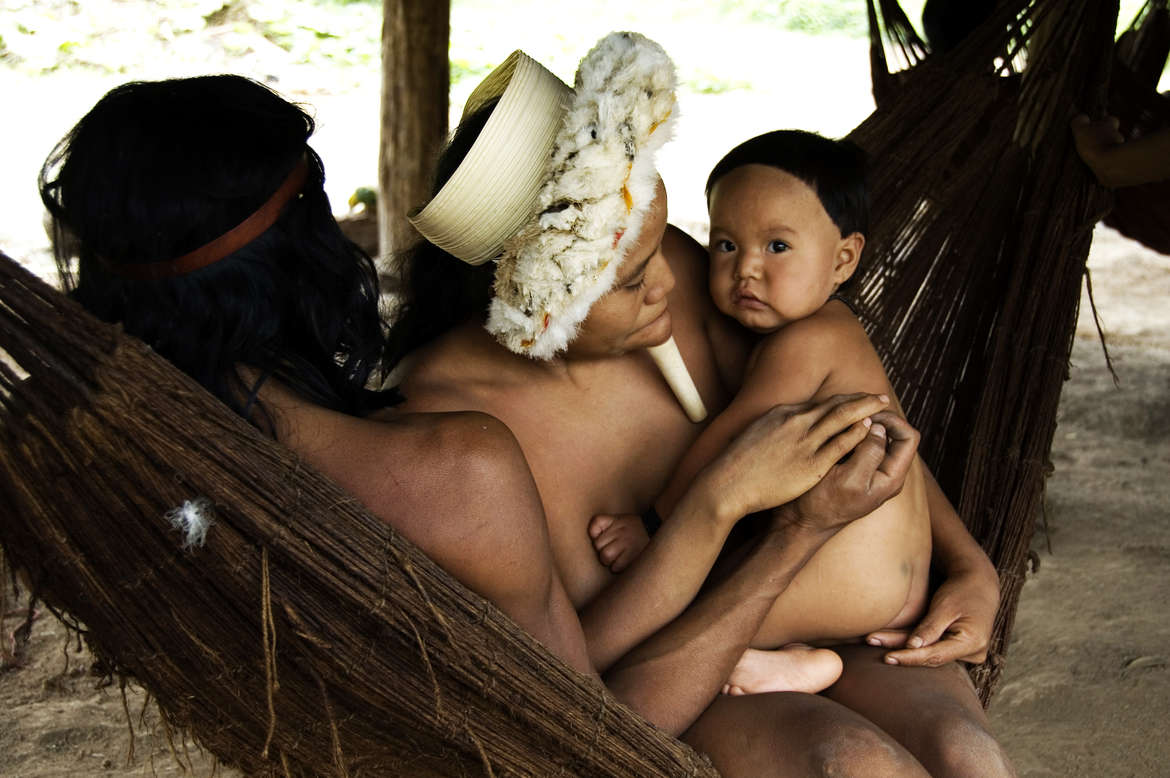
Staple crops such as manioc, sweet potato, corn, bananas and pineapples are grown in gardens. Animals such as peccaries, tapir and monkeys, and birds like the curassow are hunted for meat.
Some tribes, like the Matis, use long blowguns with poisoned darts to catch prey. Most use bows and arrows, and some also use shotguns. Nuts, berries and fruits such as açai and peach palm are regularly harvested and bees’ honey is relished.
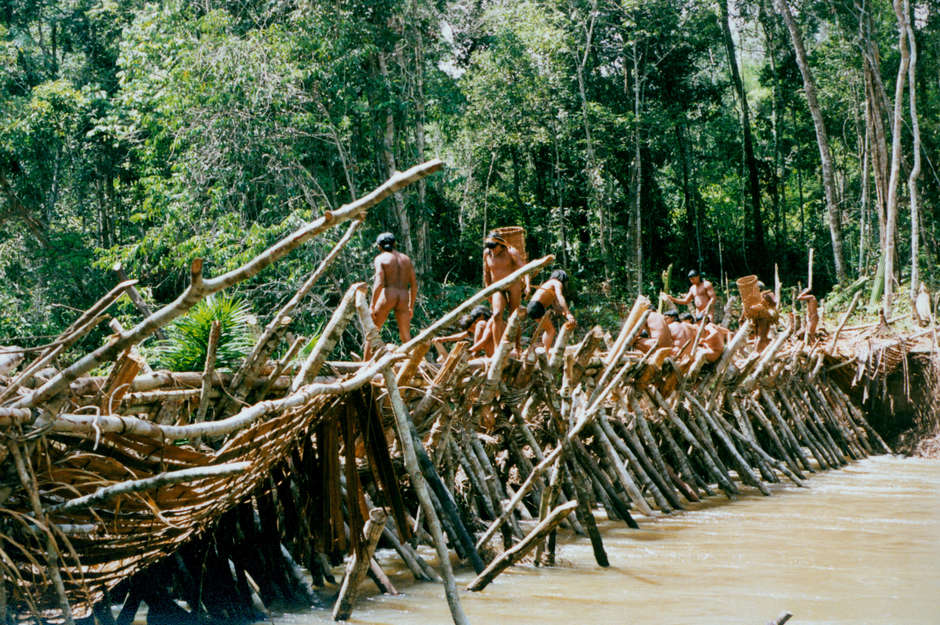
Fish, particularly in the Amazon, is an important food. Many indigenous people use fish poison or timbó to stun and catch fish. The Enawene Nawe, who do not eat red meat, are renowned for the elaborate wooden dams called ‘waitiwina’ which they build across small rivers every year to catch and smoke large quantities of fish. Their Yãkwa ceremony is linked to the fishing dams and has been recognized as part of Brazil’s national heritage.
A handful of peoples – the Awá, the Maku in the north-west and some uncontacted tribes – are nomadic hunter-gatherers. They live in small extended family groups and keep few possessions, which allows them to move rapidly through the forest. They can erect shelters from tree saplings and palm leaves in just a few hours.
Like all indigenous peoples, they carry incredibly detailed mental maps of the land and its topography, fauna and flora, and the best hunting places. The Awá sometimes hunt at night using torches made from the resin of the maçaranduba tree.
‘When my children are hungry I just go into the forest and find them food.’ (Peccary Awá)
Ethnobotanical knowledge and conservation role
Indigenous peoples have unrivalled knowledge of their plants and animals, and play a crucial role in conserving biodiversity.
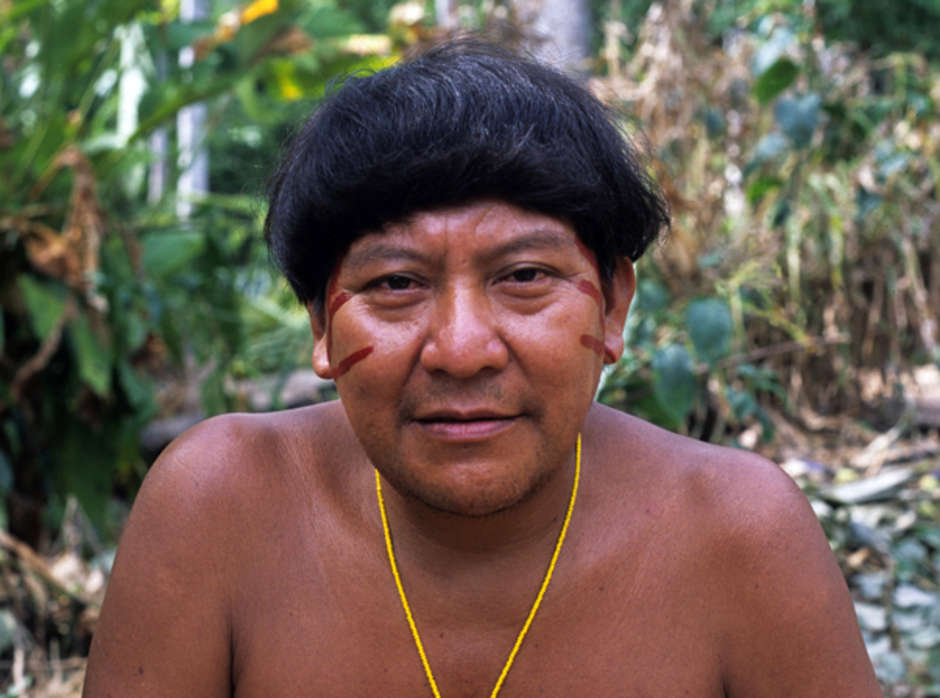
‘You have schools, we don’t, but we know how to look after the forest.’
Davi Kopenawa Yanomami
According to scientific studies, indigenous lands are ‘currently the most important barrier to Amazon deforestation.’
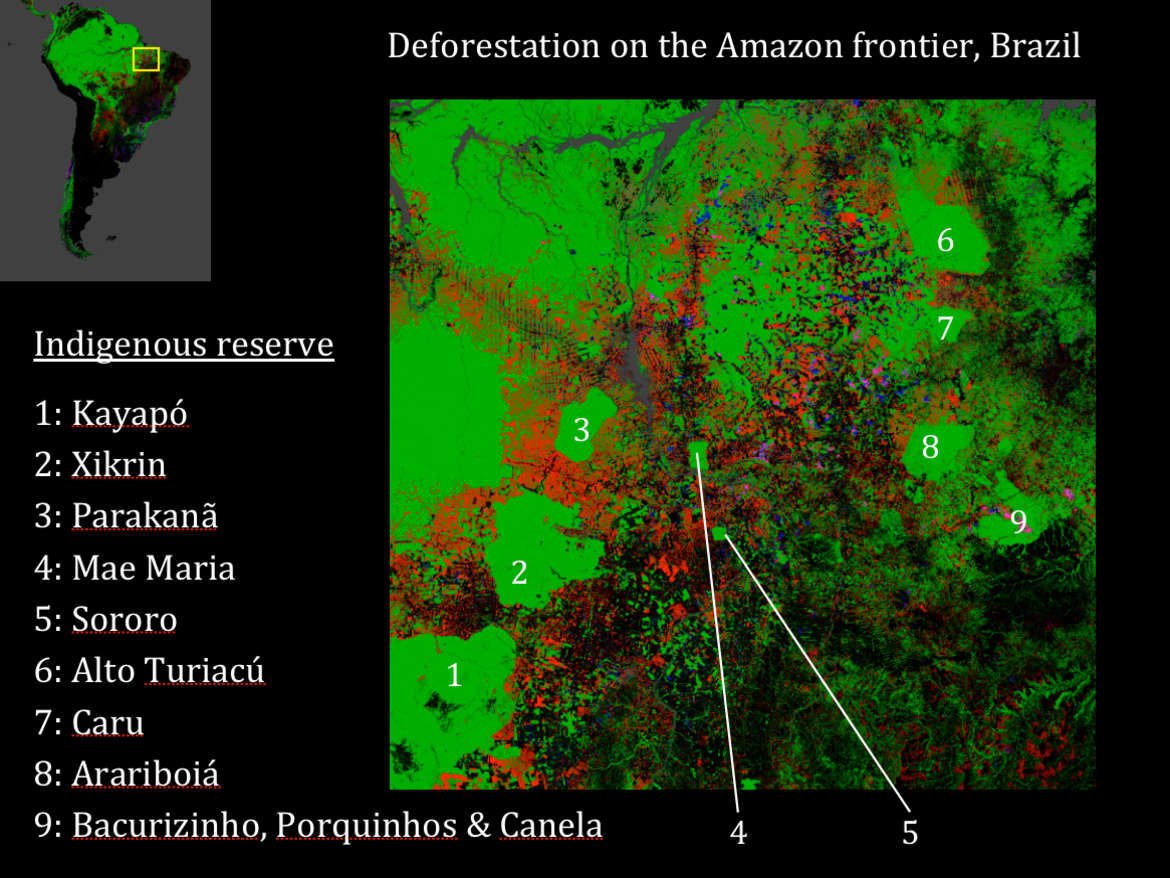
In some states such as Maranhão, the last remaining tracts of forest are found only in indigenous territories (the Awá are a good example of this), and these are under huge pressure from outsiders.
Their role in conserving the rich biodiversity of the cerrado (or savannahs) and the Amazon rainforest is vital.
‘Why is it taking so long to believe that if we hurt nature, we hurt ourselves? We are not watching the world from without. We are not separate from it.’
Davi Kopenawa Yanomami
The Yanomami cultivate 500 plants for foods, medicines, house-building and other needs. They use nine different plant species just for fish poison. The Tukano recognize 137 varieties of manioc.
Guaraná, the ubiquitous fizzy cola drink in Brazil, was known to the Satere Mawe people long before it was commercialized. They would roast the seeds, grind them into a powder mixed with water, and drink it before setting off on a hunt. The Guaraná ensured they did not feel hungry, and had enough energy to keep hunting.
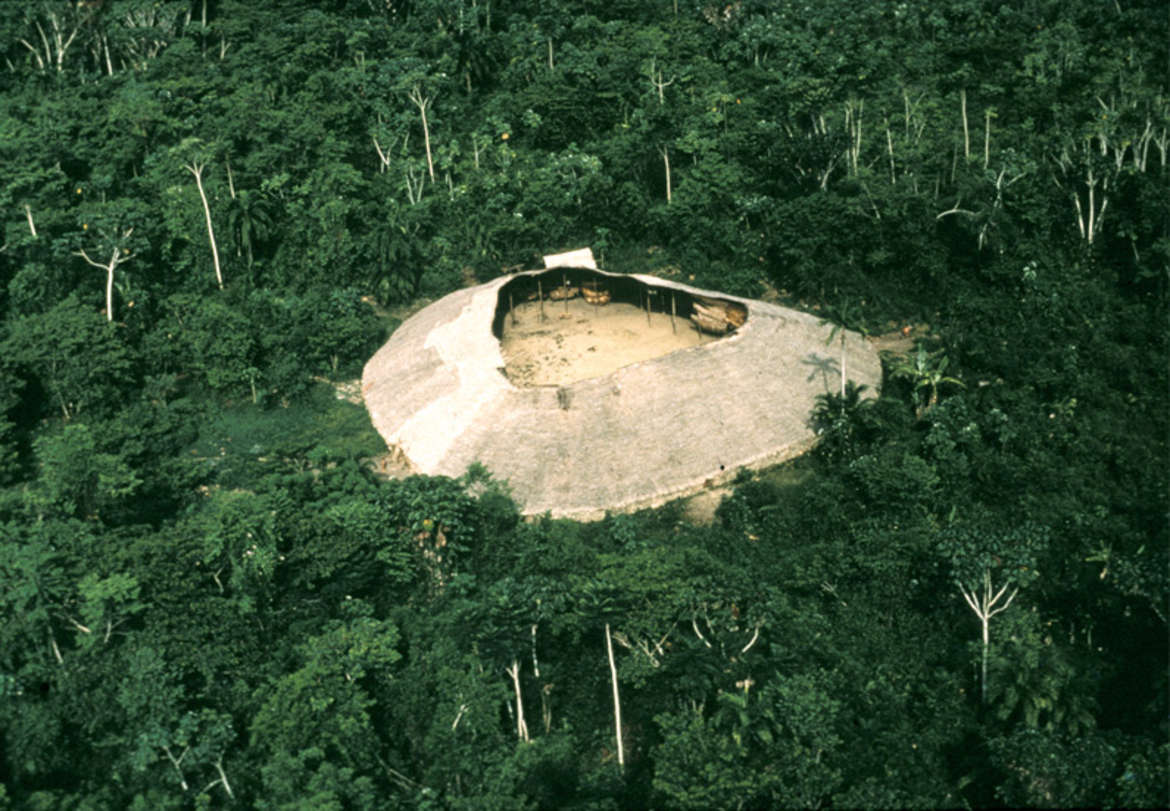
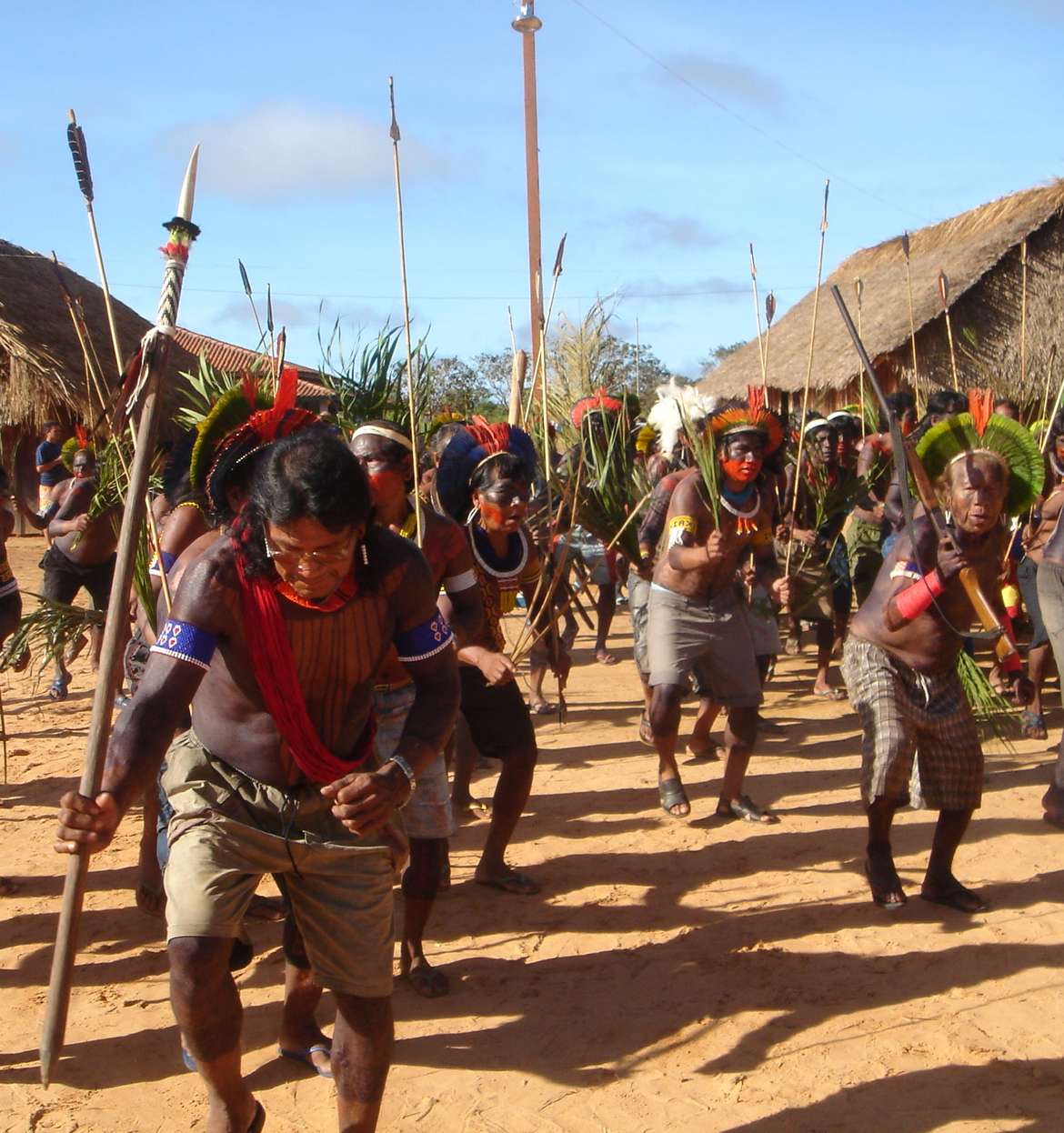
Many Brazilian Indigenous people like those of the Xingu Park, the Yanomami and the Enawene Nawe live in malocas – large communal houses – which shelter extended families, who string their hammocks from the rafters and share food around family hearths.
Spirit worlds and shamanism
Like tribal peoples throughout the world, Indigenous people in Brazil have very deep spiritual connections to their land. This is reflected in their rich oral history, cosmology, myths and rituals.
Some tribes take hallucinogenic drugs, which enable them to journey to other worlds to connect with spirits, and to cure sickness. This is not casual or recreational, but takes years of training and initiation.
Yanomami shamans inhale yakoana or yopo , a hallucinogenic snuff, in order to call on their shamanic spirits, or xapiri. The xapiri play a crucial role in healing ceremonies and during the reahu, or funeral feast, when communities come together to consume the ashes of dead people.
’I am a shaman of the rainforest and I work with the forces of nature, not with the forces of money or weapons. The shaman’s role is really important: they cure sick people and study to know the world.’
Davi Kopenawa Yanomami
Shamans of tribes such as the Kaxinawá and Ashaninka drink ayahuasca, a brew made from the caapi vine, during healing sessions. Others like the Arawete and Akuntsu smoke tobacco, or inhale it as snuff.
Some, like the Awá, take no stimulants or drugs, but go into a trance through the power of rhythmic dancing and clapping to journey to the iwa, or abode of the spirits, where they meet the souls of the ancestors and the spirits of the forest, the karawara.
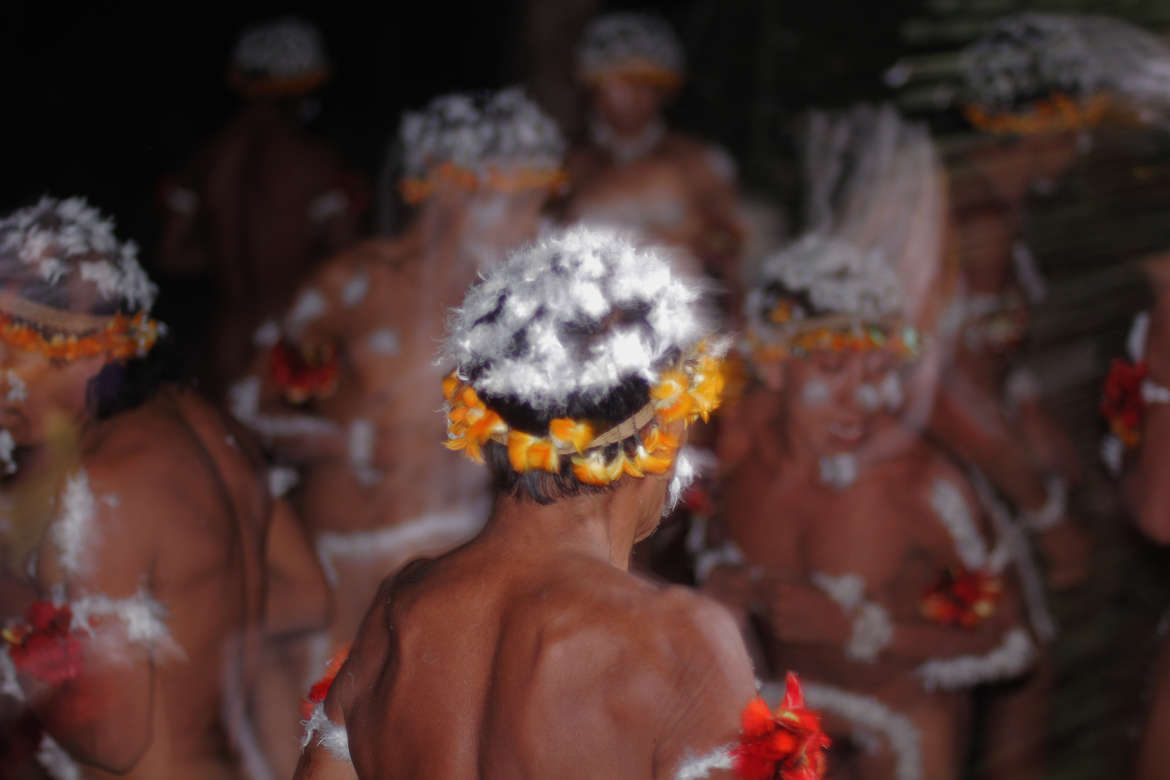
The transition from childhood to adulthood is often marked by ceremonies and seclusion. When a Tikuna girl first menstruates, she is painted black with genipapo dye and adorned with eagle feathers. She sings, dances, and jumps over fires for up to four days with almost no sleep, and then goes into isolation for several months, during which time she is taught about the history of her people and informed of her future responsibilities.
The peoples of the Xingu are famous for funerary ceremonies honoring dead leaders, who are represented by decorated trunks of wood called kwarup.
History
The history of Brazil’s indigenous peoples has been marked by brutality, slavery, violence, disease and genocide.
When the first European colonists arrived in 1500, what is now Brazil was inhabited by an estimated 11 million Indigenous people, living in about 2,000 tribes. Within the first century of contact, 90% were wiped out, mainly through diseases imported by the colonists, such as flu, measles and smallpox. In the following centuries, thousands more died, enslaved in the rubber and sugar cane plantations.
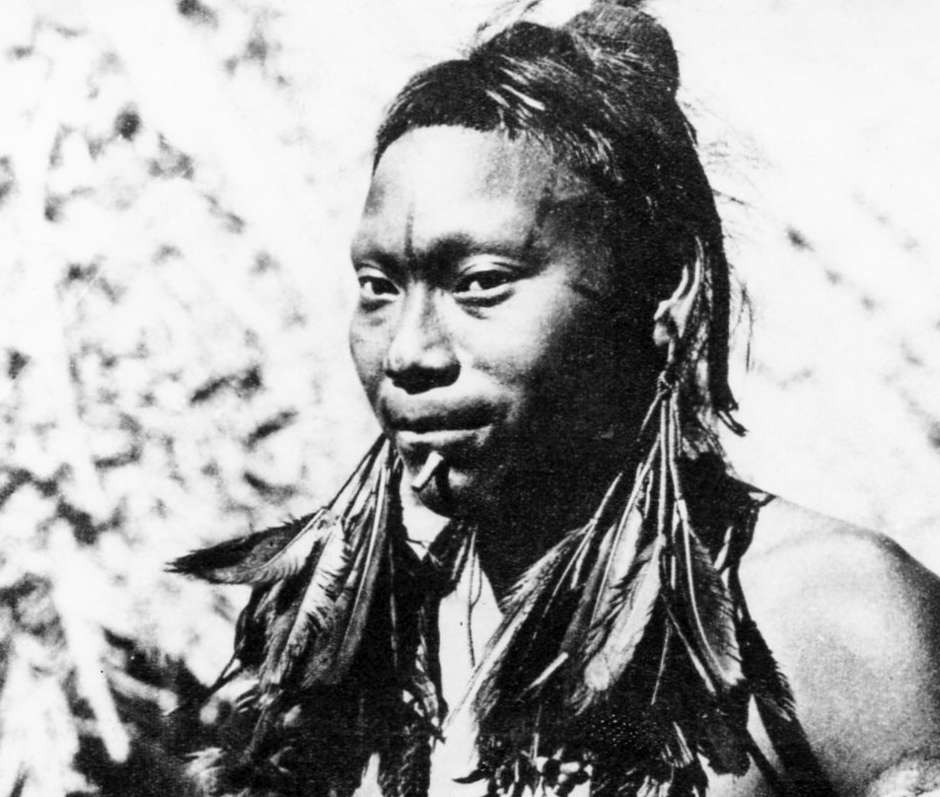
By the 1950s the population has dropped to such a low that the eminent senator and anthropologist Darcy Ribeiro predicted there would be none left by the year 1980. On average, it is estimated that one tribe became extinct every year over the last century.
In 1967, a federal prosecutor named Jader Figueiredo published a 7,000 page report cataloguing thousands of atrocities and crimes committed against Indigenous people, ranging from murder to land theft to enslavement.
In one notorious case known as ‘The massacre of the 11th parallel’, a rubber baron ordered his men to hurl sticks of dynamite into a Cinta Larga village. Those who survived were murdered when rubber workers entered the village on foot and attacked them with machetes.
The report made international headlines and led to the disbanding of the government’s Indian Protection Service (SPI) which was replaced by FUNAI. This remains the government’s indigenous affairs department today.
Survival International was founded in 1969 in response to an article by Norman Lewis in the Sunday Times magazine on the genocide of Brazil’s Indigenous people.
The size of the indigenous population gradually started to grow once more, although when the Amazon was opened up for development by the military in the 1960s, 70s and 80s, a new wave of hydro-electric dams, cattle ranching, mines and roads meant tens of thousands of Indigenous people lost their lands and lives. Dozens of tribes disappeared forever.
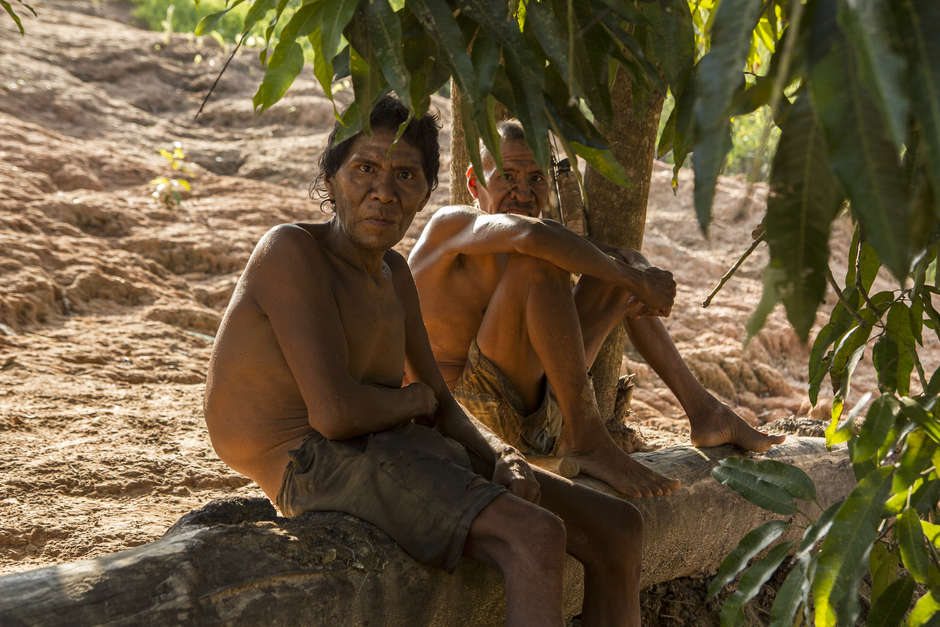
Twenty-two years of military dictatorship ended in 1985, and a new constitution was drawn up. Indigenous people and their supporters lobbied hard for more rights.
Much has been achieved, although Indigenous people do not yet enjoy the collective landownership rights they are entitled to under international law.
‘This here is my life, my soul. If you take the land away from me, you take my life.’
Marcos Veron, Guarani
Threats and challenges today
Since Europeans arrived in Brazil over 500 years ago, the tribal peoples there have experienced genocide on a huge scale, and the loss of most of their land.
‘We didn’t know the white people were going to take our land. We didn’t know anything about deforestation. We didn’t know about the laws of the white men.’
Enawene Nawe
Today, as Brazil forges ahead with aggressive plans to develop and industrialize the Amazon, even the remotest territories are now under threat. Several hydro-electric dam complexes are being built near uncontacted tribes groups; they will also deprive thousands of other Indigenous people of land, water and livelihoods. The dam complexes will provide cheap energy to mining companies, who are poised to carry out large scale mining on indigenous lands if Congress passes a draft bill that is being pushed hard by the mining lobby.
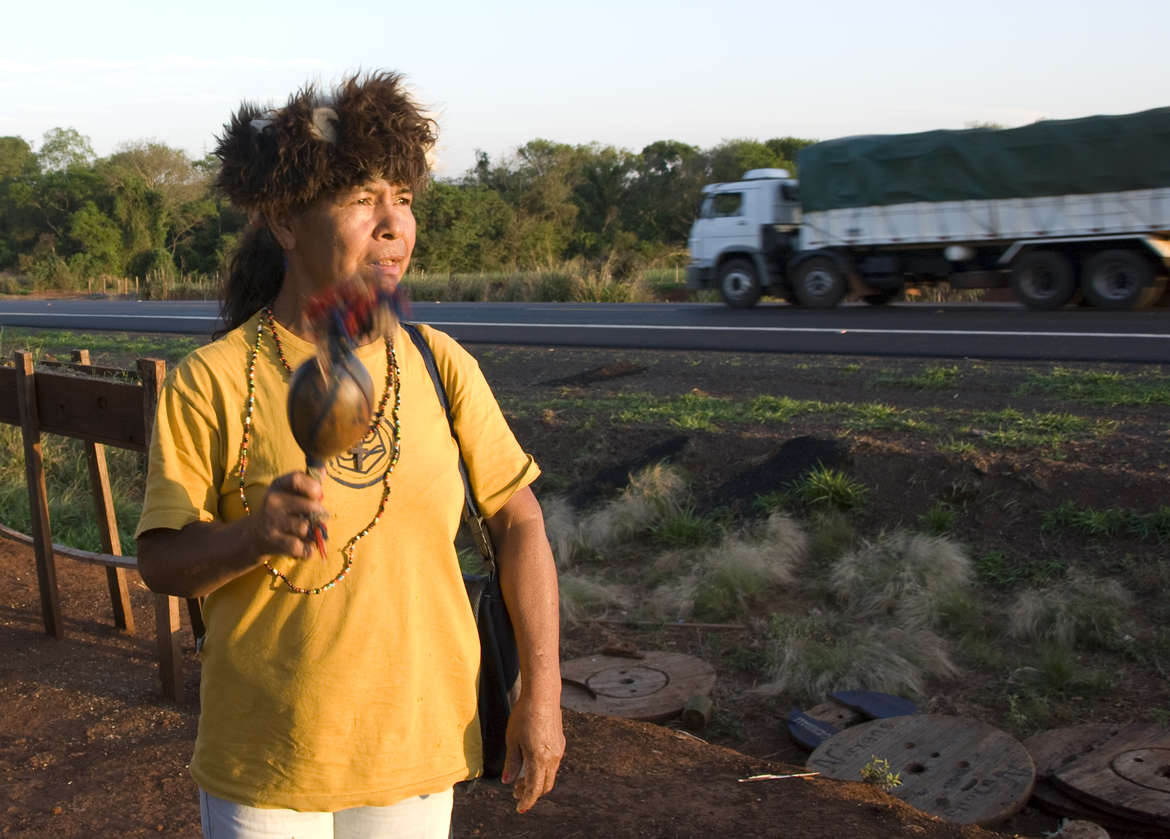
In the south many tribes such as the Guarani live in appalling conditions under tarpaulin shacks along the roadside. Their leaders are being systematically targeted and killed by private militias of gunmen hired by the ranchers to prevent them occupying their ancestral land. Many Guarani have committed suicide in despair at the lack of any meaningful future.
‘In the old days, we were free. Now we are no longer. So our young people think there is nothing left. They sit down and think, they lose themselves, and then commit suicide.’
Rosalino Ortiz, Guarani
How can I help?
- Donate to Survival.
- Write a letter to your MP or MEP (UK).
- Write to the President, your senators, congressmen or other elected officials.
- Write a letter to your local Brazilian embassy – addresses are listed at www.embassiesabroad.com.
How does Survival help?
Since 1969, Survival has campaigned alongside Indigenous peoples in Brazil for their land rights to be upheld.
We are fighting for the protection of the territories of the Kawahiva, the Awá and other uncontacted tribes who depend entirely on their forests for their survival, for illegal gold miners to be removed from Yanomami land, and for lands stolen for agribusiness to be returned to the Guarani and other Indigenous peoples across the country.
Join the mailing list
More than one hundred and fifty million men, women and children in over sixty countries live in tribal societies. Find out more about them and the struggles they’re facing: sign up to our mailing list for occasional updates.
News from the Brazilian Indigenous People

Brazil Congress overrides Lula’s veto of PL2903: Survival’s reaction
Brazil’s Congress has pushed through a new law containing a series of extreme anti-Indigenous measures.
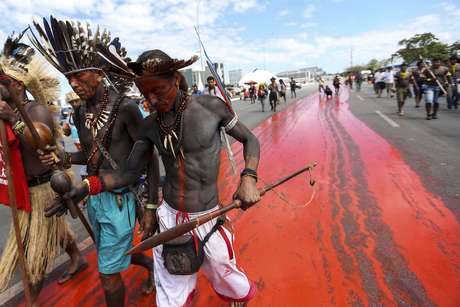
Brazil's Chamber of Deputies approves Bill PL490: Survival's response
Survival International responds to the recent vote in Brazil’s Chamber of Deputies that has approved the PL490 bill.

Indigenous Amazon Guardian killed in Brazil – the sixth in recent years
Janildo Guajajara was shot on Saturday in a logging town near the Arariboia Indigenous Territory, Maranhão state, where he lived.

Global protests as Brazil’s Supreme Court set to begin landmark Indigenous rights ruling
Indigenous people in Brazil have met to protest the "Bill of Death" and other genocidal plans by Bolsonaro's government.

PHOTOCALL NOTICE: Protest at Brazilian Embassy in London against the Brazilian government’s genocidal attack on Indigenous peoples
Protestors are taking a stand in London against a Brazilian Congress that "continues to push an anti-Indigenous agenda".

Brazil: one year since first Indigenous death from Covid-19
More than 1,000 Indigenous people have died from the virus in Brazil.