
Swept to the edge of extinction by warring outsiders
The hunter-gatherer Nukak in Colombia have only been in regular contact with people outside their tribe since the late 1980s. The Nukak’s rainforest was invaded and most Nukak were forced out of their territory to the outskirts of nearby towns. Malnutrition and diseases such as malaria have killed around half of their people, while many of the survivors now face sexual exploitation and drug addiction. The Nukak are fighting to go back home.
Act Now to support the Nukak
Traditionally, the Nukak live between the Guaviare and Inírida rivers in south-east Colombia, in small groups in the deep forest away from the rivers.
They used to be constantly on the move, spending just a few days in any one place and owning very few, easily portable possessions.
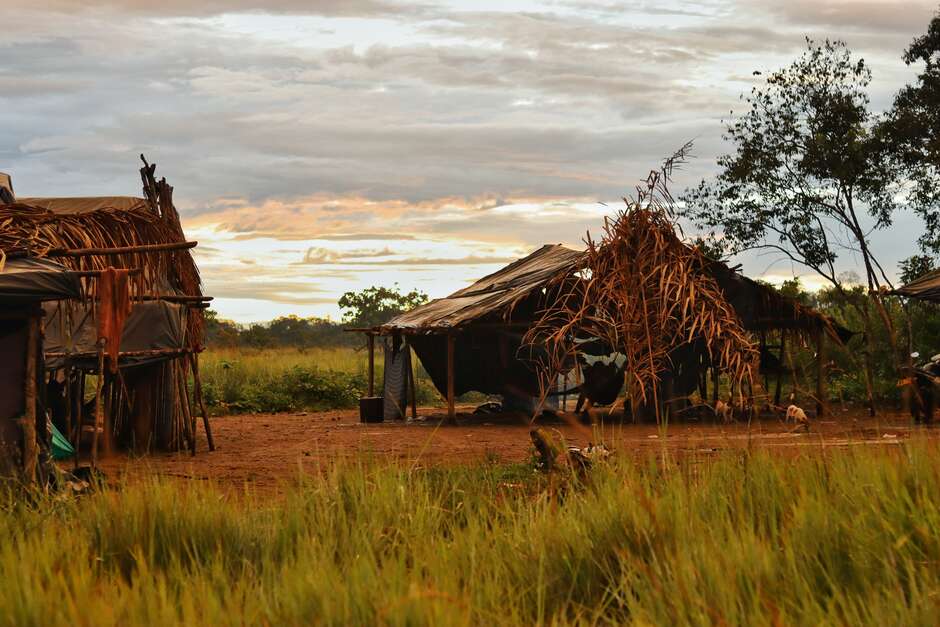
Nukak houses tend to be very light structures made of wood and palm-leaves, just enough to provide a roof to sling a hammock under. Since they were forced out of their forest, they do not have access to as many palm trees as they used to, and they depend on big plastic sheets to cover their roofs to protect themselves from the heavy Amazon rains. These plastic sheets break easily with the wind and they are expensive and very difficult to obtain.
Each family has its own hearth, used to keep warm, cook, and to burn certain plants to keep mosquitoes away.
The Nukak eat fish, game, turtles, fruit, vegetables, nuts, insects and honey.
The men hunt using blowguns, with darts tipped with curare, a poison made from up to five different plants.
Contact
The Nukak avoided almost all regular contact with outsiders until 1988 when a group of about forty turned up unexpectedly at a recently-founded colonists’ town called Calamar.
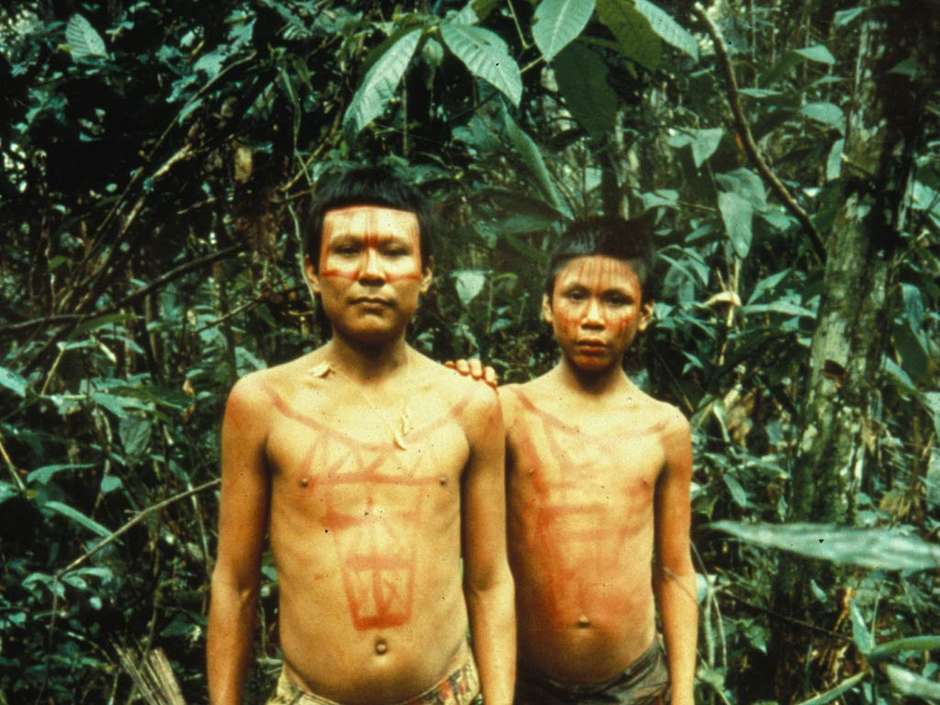
Although they were on what they considered to be their ancestral territory, their sudden arrival at Calamar created a sensation in the Colombian and international press.
But the consequences of regular contact were appalling. In the following years, partly as a result of loggers and coca growers encroaching on their land, more and more Nukak came into contact with outsiders and many were devastated by diseases such as malaria and flu.
In total, more than half of the entire tribe died between the late 80s and early 90s, mostly from flu.
It was only around this time that it was revealed that evangelical Christian missionaries from the controversial ‘New Tribes Mission’ had made contact with the Nukak in the 1970s.
Extinction point
In 1993 thanks to campaigning in Colombia by ONIC (National Indigenous Organization of Colombia) and others, amplified internationally by Survival, the Nukak Reserve was created, and then expanded in 1997 to encompass almost 1 million hectares of forest.
In 2009, the Nukak were declared one of at least 32 tribes in Colombia believed to be at ‘imminent risk of extinction’, according to the country’s national indigenous peoples’ organization, ONIC.
Act Now to support the Nukak
Today
Today their population has slightly recovered, although the population is still lower than 1,000, but their lands are being violently occupied by various armed groups; by outsiders using the Nukak’s forest to grow coca for the cocaine trade; and by cattle ranchers who have deforested large areas. As if that were not enough, much of their territory is littered with anti-personnel mines.
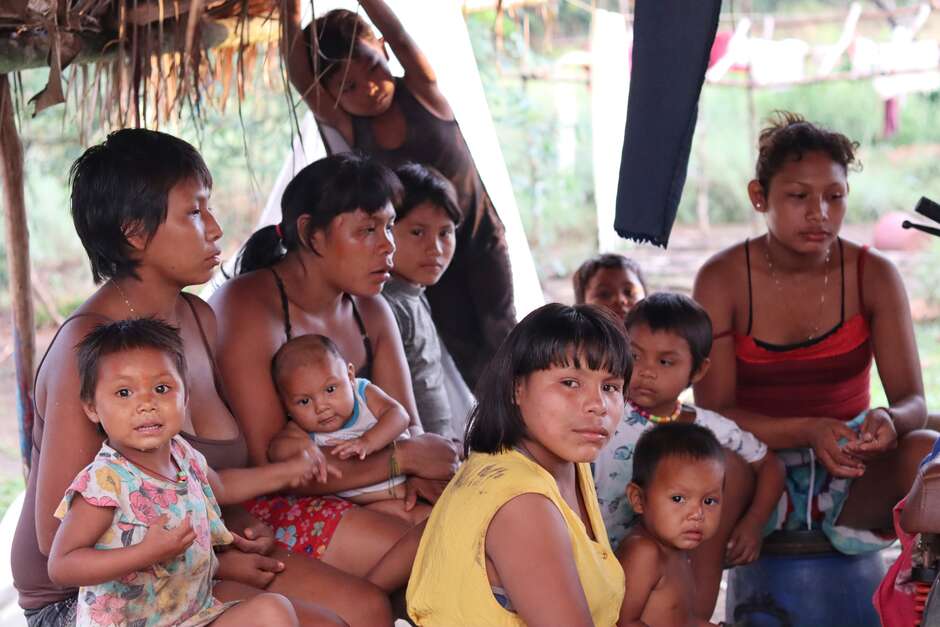
As a result, many Nukak were forced to flee their homes and seek refuge on the outskirts of a town called San Jose del Guaviare. Other Nukak were forced to leave at gun-point.
In 2006 the government tried to move the displaced Nukak back to the rainforest, but the chosen location, only fourteen kilometers from San Jose, was far too small.
After a flu epidemic and the tragic suicide of one of their spokesmen, Mao-be, the Nukak abandoned the area and went back to San Jose.
The Nukak are now confined to around 20 settlements in Guaviare Department which lie outside their ancestral territory. Although they were prioritized in Colombia's recent Peace Agreement negotiations, the gravity of their situation has not improved. Largely ignored by the authorities, there is no updated census of their population, and they lack access to basic healthcare and resources to sustain themselves. Their precarious state and recent contact with mainstream society make them extremely vulnerable to common diseases like flu and measles to which they have no immunity. The young Nukak are particularly exposed to alcohol and drug abuse, sexual exploitation, and recruitment as forced labor in the illegal coca plantations.
The Nukak are desperate to return home, so they can thrive once more as self-sufficient people - but, given the dangers, the authorities need to take urgent action to ensure that Colombian law is upheld and the Nukak can live safely on their land.
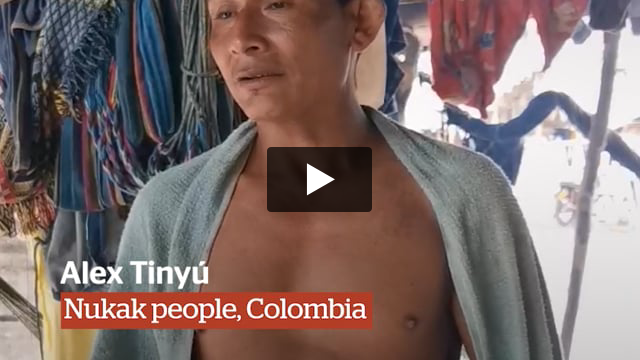
Learn more about the Nukak
- "Los colonos me pusieron María. Pero yo no soy María. Jenawen es mi nombre" by Fiore Longo.
- "The Nukak - The last contacted tribe in Colombia fighting to return home for more than 30 years." by Sara Mediavilla.
Act now to support the Nukak
Campaigning for the Nukak’s rights has already made a huge difference. After campaigns led by Survival and local indigenous organizations, the Colombian government created a Nukak reserve in 1993 and enlarged it in 1997.
What the Nukak want now is for the boundaries of their reserve to be respected and for them to be able to live there in peace, as is their right.
Please write to the Colombian government
Join the mailing list
More than one hundred and fifty million men, women and children in over sixty countries live in tribal societies. Find out more about them and the struggles they’re facing: sign up to our mailing list for occasional updates.
News from the Nukak
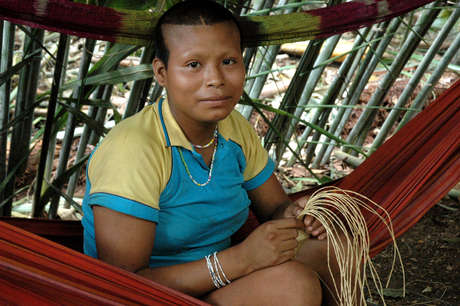
Colombia’s most recently contacted tribe violently forced from homes
The Nukak's land has been overrun by illegal armed groups, and coca-growers for cocaine production.
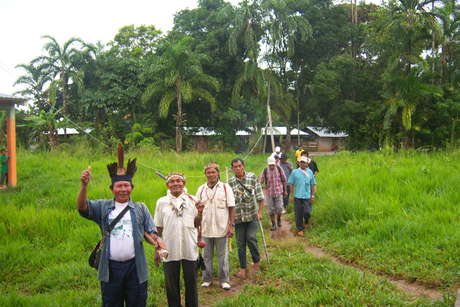
Land mine kills elderly Indian man in Colombia
Jiw Indian was the latest victim of Colombia's internal war between guerrilla groups, paramilitaries and the army
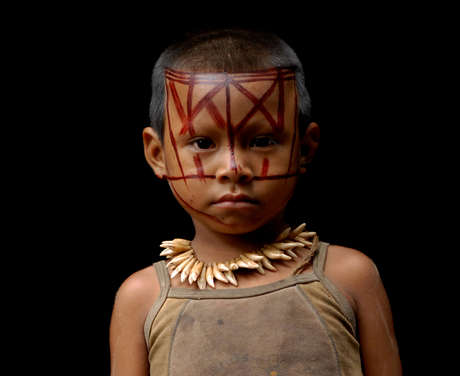
Violent threats against Nukak photographer
Colombian photographer told to stay away from the tribe after publicizing their plight
Rebel raid strips endangered Colombian tribe of emergency medicines
FARC rebels have hijacked a boat providing emergency care to vulnerable Nukak tribe
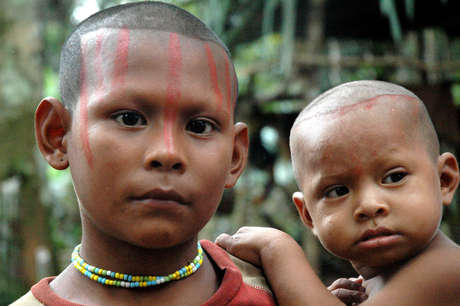
Anti-extinction campaign launched to protect 35 Colombian tribes
UN warns ‘If they disappear, a part of you disappears’
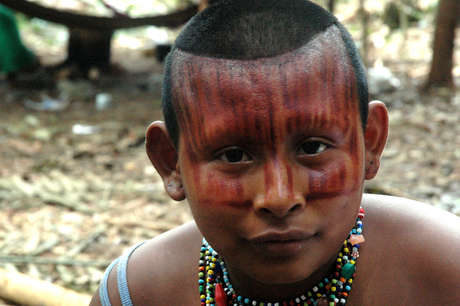
Epidemic strikes Amazon nomads
35 Nukak have been hospitalized with a respiratory disease